
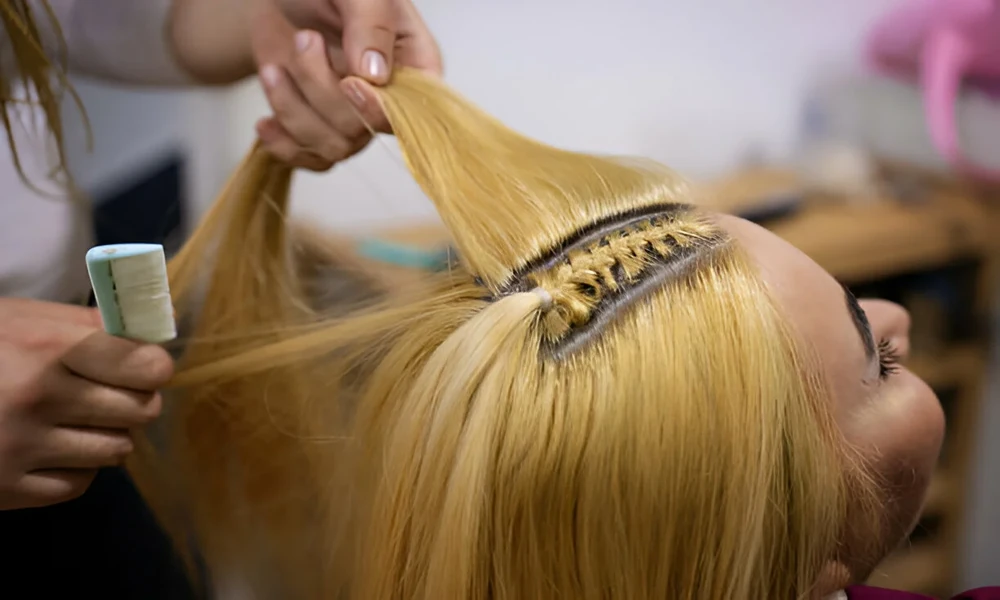
For many wig-wearers, the wig that they buy isn’t the one they feel 100% comfortable wearing right away, and this may be because of factors such as the hairline not looking natural enough or the cap not fitting perfectly.
Whatever the reason, it’s totally normal and totally fixable.
Customizing your wig for the perfect look and fit
The best way to ensure that you look and feel great in your new hairpiece is to invest in custom-made wigs right from the get-go; get yourself measured up and fitted in a local wig store with the help of the experts who work there. This personalized approach allows the first time you wear your wig to be just as outstanding as the second, third, fourth, and so on.
But if you’ve bought a manufactured wig online or from a store without getting properly fitted for it, there’s a strong chance that it won’t look how you expected it to without some form of intervention.
Why new wigs sometimes resemble a helmet
You might not know it, but natural human hair has a density gradient that’s very specific: around 80% to 90% at the front and 130% toward the crown. To make sure that tracks or wefts aren’t visible, wigs are made with a uniform density of 130% all over, something that, without work, often creates a helmet effect.
To fix this, professional customization is key.
What it takes to customize a wig professionally
Customizing a wig isn’t an easy task, and only those with the right skills and experience should attempt it. Let’s look at what is involved at each stage:
· Sculpting the hairline
Wig hairlines can be blunt and dense. Professionals use a technique called ‘vertical micro-plucking’ to resolve this, which involves alternating knots being plucked carefully from the lace grid to resemble a natural, biological hairline. In some circumstances, the tiny knots tying the hair to the base may also be bleached to make the grid invisible against your skin.
· Precision cutting
Although you might think that a regular hair stylist is able to trim all wigs, the traditional tools that they use on biological hair would damage the fibres of a wig made from anything but human hair.
Instead, highly specialized techniques are used by professionals to cut synthetic wig hair, such as vertical interior channel thinning and dry slide-cutting, to remove density from the inside out and allow the hair to move in a natural way without stubble being visible near the cap.
· Resizing and tailoring the cap
Nobody wants to wear a wig that slides around on their head or buckles, and yet a cap with the wrong architecture for the wearer’s head can offer a less than natural look. Fortunately, the experts you might expect to find in a wig store can use tiny dart seams to take in excess crown fabric, giving you a head-hugging effect. For additional security, polyurethane silicone non-slip strips are strategically placed, while the velvet ear tabs are adjusted to sit flush with your temples.
The wig you buy might not look or feel comfortable and natural when you first try it on at home, but with a quick visit to your local wig store, it can be customized to the point in which even you don’t know that you’re wearing it!